
I Went to YC Startup School India and Left With More Conviction
- Published on
- //6 mins read/––– views
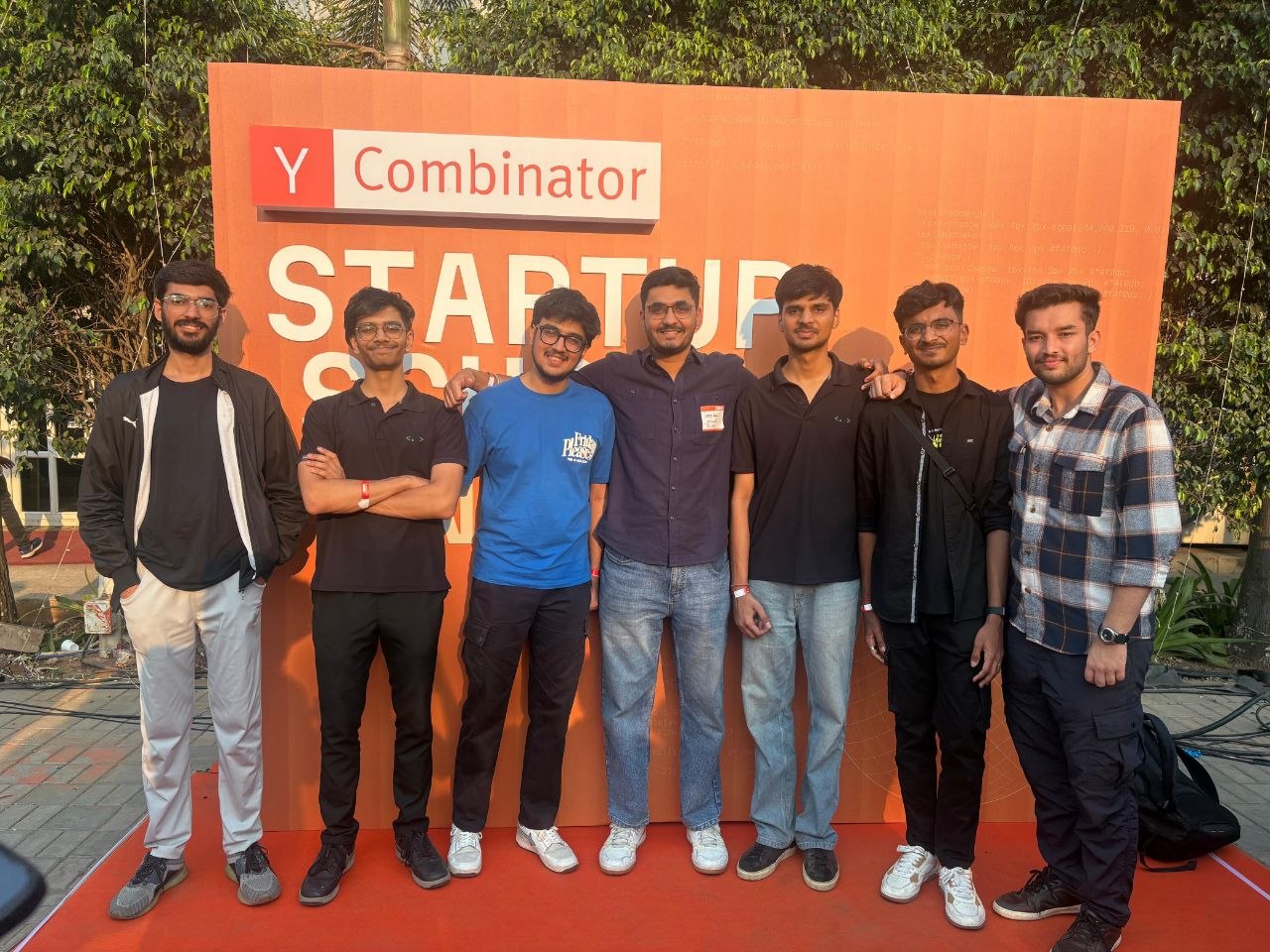
I went to YC Startup School India expecting a good event.
I left thinking: this is why founder rooms still matter.
Not because of some magical startup energy. Not because every conversation changed my life. And not because events suddenly solve your problems.
It mattered because for a few hours, I got to be in a room full of people who were all trying to build something real.
And when you’re building, that kind of room resets your thinking.
The internet is useful. Real rooms are different.
Most startup conversations online are filtered.
People post polished launches. People post wins. People post threads that sound cleaner than reality.
But in person, you get a more honest version.
You meet founders who are still figuring things out. People still searching for distribution. People still changing direction. People still unsure whether their idea is actually painful enough for others to care about.
That part felt refreshing.
There's something grounding about hearing people talk about what they're building without a landing page, without branding, and without the internet polishing the edges for them.
The best part was the conversations
The most valuable part of YC Startup School India wasn't the event format itself.
It was the people.
I got to meet a lot of builders and founders working on very different problems, and almost every conversation had the same honest energy:
- here's what I'm building
- here's why I think it matters
- here's what I'm still unsure about
That's the kind of conversation I like.
Not pitch mode. Not fake confidence mode. Just real builder conversations.
And that's where these events become useful.
Because when you explain what you're building to people in person, you find out very quickly whether it actually makes sense outside your own head.
The on-stage message hit too
One thing that stayed with me from the event was the broader message YC was pushing about what this moment means for Indian founders.
The framing was clear:
- we are early in a second wave of Indian startups building AI-native products for the global market
- crowded markets are not a reason to quit early — second-mover advantage is real
- execution still matters more than originality theater
- Indian engineering talent is absolutely good enough to win globally
- the best founders right now are building at the edge of what is technically possible
That part resonated.
Because it cut through a lot of lazy startup thinking.
There’s this weird tendency to assume that if a category already has companies in it, it’s too late.
But that’s just not how good startups work.
A lot of great companies were not first. They were just better. Faster. Clearer. More obsessed with execution.
That reminder mattered.
The AI point especially felt real
Another idea that stood out was how aggressively founders should be using AI coding and staying close to the frontier.
That part didn’t feel like generic hype. It felt practical.
The message was basically:
- use the latest models
- stay close to open source
- keep up with what the best builders are doing
- build faster than what previously felt possible
That matches what I’m seeing too.
The gap between builders who are fully leaning into AI-assisted development and builders who are still treating it as optional is going to get ridiculous.
This isn’t just about productivity in the abstract. It changes what a small team can even attempt.
When people say one person can now do the work that used to take a much bigger team, that no longer sounds exaggerated in the way it did a year ago.
It’s starting to feel normal.
Talking about KubeOrch helped more than I expected
One of the best things for me was getting to talk about KubeOrch with people directly.
Not in a demo thread. Not through a post. Just in actual conversation.
That kind of interaction is useful because it forces clarity.
When you explain your product repeatedly to smart strangers, weak framing gets exposed fast. And that's a good thing.
Some people understood the problem immediately. Some asked sharp questions. Some pushed on the framing in ways that were actually helpful.
That kind of feedback is much more valuable than generic encouragement.
It helped me validate that the problem resonates — and also sharpen how I talk about it.
Validation is usually quieter than people think
I think a lot of people imagine validation as some dramatic founder moment.
Like someone hears your idea and says:
this is brilliant, I need this right now
That's not usually how it happens.
Real validation is quieter.
It looks like:
- people immediately understanding the problem
- people asking deeper questions instead of confused ones
- people relating it to pain they’ve already seen
- people helping you refine the way you explain it
That's the kind of signal I got.
Not “you’ve already won.”
More like:
this makes sense — keep going.
That's the kind of validation that matters more.
PointBlank Club was a fun part of the day too
Another thing I liked was getting to interact with people from PointBlank Club there as well.
That added a different kind of energy to the event.
It made the whole thing feel less like a one-directional founder event and more like a real community moment — smart people, good conversations, overlapping circles, and a lot of curiosity in the room.
Those environments matter.
Not because you walk away with one magical contact. But because being around ambitious people who are actually building makes your own thinking sharper.
The biggest takeaway
I didn’t leave the event with one giant breakthrough.
I left with something better:
more clarity, more conviction, and better questions.
Clarity about how to explain what I’m building. Conviction that I’m solving something real. And better questions about where to go next.
That, to me, is what a good founder event should do.
Not give you certainty. Just help you refine it.
Final thought
If you’re building something and you get the chance to spend time in a room full of other serious builders, go.
Not because every event is magical. Not because every conversation will be amazing.
But because building in isolation distorts your thinking.
Sometimes the most useful thing you can do is explain your idea out loud to smart people and see where they lean in, where they get confused, and what they ask next.
That's what YC Startup School India gave me.
And that alone made it worth it.
On this page
- The internet is useful. Real rooms are different.
- The best part was the conversations
- The on-stage message hit too
- The AI point especially felt real
- Talking about KubeOrch helped more than I expected
- Validation is usually quieter than people think
- PointBlank Club was a fun part of the day too
- The biggest takeaway
- Final thought